

Oceans Woven with Fire and Faith
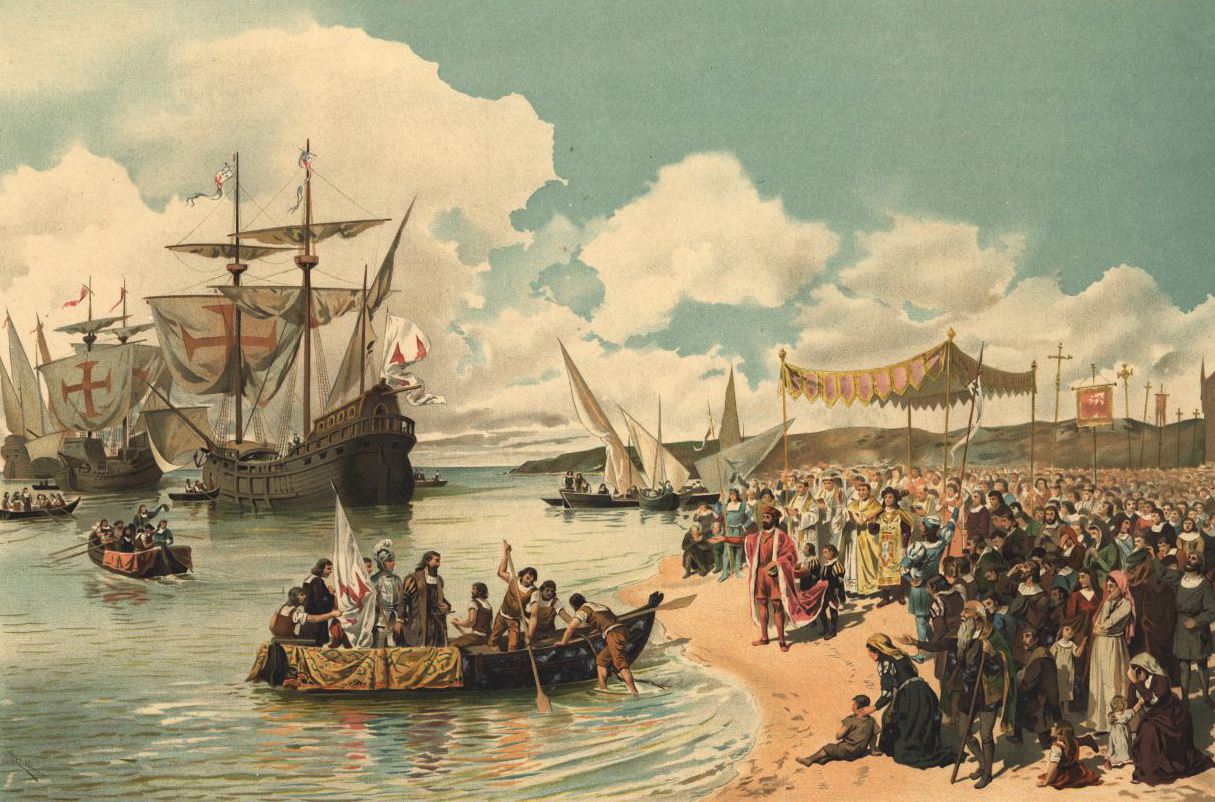
A vivid exploration of ambition, discovery, and dominion in the age of colonial empires
Where the Horizon Became a Boundary
The dawn of the colonial era began with a trembling compass needle and the hunger of monarchs who dreamed of wealth beyond maps. Sailors stared into horizons once believed to drop into eternity and found instead the vast curve of the world inviting conquest. From Lisbon to Seville, from London to Amsterdam, harbors filled with ships that carried not only explorers but entire futures carved in oak and iron. Navigation was a gamble, yet it became the axis around which global power turned. For the first time, wind and tide translated into politics, as oceans ceased to divide continents and began to stitch them together in fragile threads of trade and conquest. Every voyage blurred the boundary between myth and geography, and each new landfall redrew the mental world of Europe, creating an empire of imagination long before it became one of possession.
Behind every expedition was a ledger as important as a map. Finance houses, royal sponsors, and privateers invested in the promise of distance, converting curiosity into commerce. The dream of wealth drove invention, and fear of rival powers turned exploration into race. As caravels crossed waters unnamed, the old world tilted toward a new axis of ambition. The sea, once feared, became the stage upon which civilization rehearsed the drama of empire.
Gold, Cross, and Crown
Religion and greed walked hand in hand across the new frontiers. Missionaries carried crosses into jungles and deserts, believing they bore salvation, while conquistadors followed close behind with cannons and flags. Conversion justified expansion, and expansion sanctified conversion, creating a cycle of faith and violence that reshaped continents. To the faithful, the New World was a divine theater where souls awaited rescue, but to merchants, it was an open vault filled with spices, silver, and unclaimed soil. Churches rose beside forts, and altars shared the skyline with gallows, blending piety with power until they became indistinguishable.
Colonial faith was not simply exported, it adapted. Local gods were absorbed into saints, rituals fused with new prayers, and temples became cathedrals built from old stones. This synthesis softened conquest in appearance while deepening control in substance. The missionary’s sermon prepared the ground for the soldier’s march, and the Bible often arrived bound with the same leather that lined the whip. Yet for all the brutality, faith also preserved fragments of language and identity, recording native voices even as it sought to erase them. The paradox of redemption through domination defined the age, turning salvation into both a creed and a currency.
Empires of Trade and Tribute
The machinery of empire was built not only with swords but with scales and contracts. Ports became laboratories of capitalism where spices, sugar, tobacco, and human lives were weighed and sold. The triangle of trade between Europe, Africa, and the Americas created unprecedented wealth for some and unspeakable ruin for others. Merchant fleets carried the scent of cinnamon alongside the stench of bondage, reminding the world that prosperity often sailed under the same flag as suffering. Banking houses grew as vital as armies, and insurance became the invisible armor of empire, protecting investments that stretched across oceans.
Markets demanded more than goods; they demanded control. Colonial powers drew borders on coastlines they barely understood, erecting monopolies that dictated who could trade and at what price. Naval might enforced economic order, and piracy became a kind of unofficial warfare where patriotism and plunder shared the same deck. Cities like Calcutta, Manila, and Havana rose as nodes in a vast commercial web, each one humming with the rhythm of counting rooms, warehouses, and harbormasters’ bells. By the seventeenth century, trade was not only commerce but ideology, proof that expansion equaled civilization and that profit could justify possession.
Voices Beneath the Empire’s Canopy
Every colonial venture silenced someone, yet silence never endured. Beneath the proclamations of governors and priests lived the voices of the conquered, speaking in persistence if not defiance. Slaves carved their history into songs that outlasted their chains, and indigenous communities preserved lineage through stories whispered in forbidden tongues. Resistance took many forms, from open rebellion to quiet refusal, from desertion to preservation of memory. The empire’s greatest illusion was that it had conquered completely, yet it never did. Culture survived in disguise, hidden in food, rhythm, and ritual that colonizers consumed without understanding. Even the tools of oppression became instruments of endurance when adapted by the oppressed.
In colonial capitals, cultural blending produced something unplanned but irreversible. Languages fused, music intertwined, and new identities were born between whip and altar. These hybrid cultures outlived their rulers, teaching the world that power can build cities but cannot dictate their soul. The empire’s architecture might have been stone, but its legacy was human, mutable, and alive. Each rebellion, however brief, reminded the world that conquest could never extinguish consciousness, and that every empire eventually faced the echo of its own silenced voices.
Cartographers of Dominion
To map the world was to own it. The cartographer’s quill became the silent weapon of empire, drawing lines that transformed vast unknowns into territories, and territories into property. Maps were not mirrors of reality but instruments of ambition. A single stroke of ink could erase a civilization, rename a river, or claim an island no one from the metropole had ever seen. Explorers brought sketches of coasts and rumors of mountains, while scholars in distant academies translated these into borders and names that would outlast their empires. Geography became the language of legitimacy, and measurement became the creed of conquest.
As precision improved, domination deepened. Longitude and latitude replaced legend and lore, and the imperial archive grew thicker with each voyage. Yet even the most detailed charts could not contain the chaos of colonization. Hurricanes erased ports, deserts swallowed caravans, and maps had to be redrawn by those who survived them. Still, the dream of mastery endured, transforming space into an empire’s most valuable possession. Every frontier mapped was a frontier lost to mystery, but also a step closer to control. In that pursuit of perfect knowledge, humanity sacrificed wonder for ownership, a trade that still haunts the modern mind.
The Architecture of Possession
Colonial architecture embodied both dominance and desire. From fortress walls to baroque cathedrals, the built environment declared that the conquerors had come to stay. European facades rose over tropical soil, blending imported stone with local labor and ingenuity. Palaces faced plazas where markets thrived under surveillance, while government halls imposed symmetry upon landscapes that once followed the rhythms of rivers and seasons. Each arch and dome was a sentence in the empire’s grand declaration of permanence, written in mortar rather than ink.
Yet the colonies rebuilt these spaces with their own meanings. Courtyards became meeting grounds for stories, and chapels hosted ceremonies older than their altars. The empire wanted monuments to itself but inadvertently built stages for transformation. Artisans infused imported designs with native motifs, turning subjugation into subtle resistance. The result was architecture that betrayed its creators, carrying within it both pride and protest. When empires fell, the buildings remained as fossils of their ambitions, beautiful yet burdened, standing witnesses to the contradiction between faith and force. Even today, their silhouettes against the sun whisper of splendor paid for in silence.
Science, Power, and the Promise of Progress
Knowledge was the empire’s most deceptive tool. Explorers carried not only muskets but measuring instruments, convinced that classification equaled understanding. The colonies became laboratories of observation where flora, fauna, and people were studied, cataloged, and controlled. Naturalists drew specimens while governors drew conclusions, and science merged with policy to justify rule. The rhetoric of discovery disguised exploitation, presenting extraction as enlightenment. In the name of progress, forests were surveyed, rivers charted, and human beings measured to fit theories that placed conquerors at the pinnacle of creation.
Yet curiosity also created unintended bridges. Local guides, healers, and astronomers contributed knowledge that quietly reshaped European science, though their names rarely appeared in print. Herbal medicine, navigation by stars, and agricultural wisdom crossed oceans disguised as imperial achievement. In the exchange between conquest and curiosity, humanity learned as much as it destroyed. The empire sought to measure the world and ended up revealing its own limitations, proving that power could expand territory but not comprehension. The pursuit of progress, once weaponized, became the very mirror that reflected the cost of domination.
The Shadows Before Dawn
No empire escapes its twilight. As the eighteenth century unfolded, the weight of distance, debt, and dissent began to crack the once seamless façade of imperial certainty. Colonies matured into contradictions, dependent yet restless, wealthy yet wounded. Revolutions brewed in coffeehouses and on plantations, in printing presses and parliaments. Words like liberty, equality, and sovereignty began to flow along the same routes once traveled by spices and slaves. The very systems that built empires now fueled their undoing, for trade taught colonies how to govern, faith taught them to dream of justice, and maps showed them how to imagine themselves as nations. The imperial world, stretched thin across oceans, could no longer hold its breath.
As uprisings ignited, crowns trembled. The idea of universal empire gave way to the rise of competing nations, each claiming to inherit civilization’s torch. Yet even as flags changed and independence declared, the patterns of domination lingered like salt in the soil. The colonial age ended in name, not in nature. Its ghosts survived in economies, languages, and hierarchies that shaped the centuries to follow. The sun may have set on every empire, but its light still bleeds into modern borders, reminding us that history does not vanish, it only changes uniform.
The Horizon That Never Closed
When the last colonial governor packed his papers and sailed home, he left behind a world permanently altered. The legacy of conquest is not merely ruin, but a tangled inheritance of cultures, languages, and memories too interwoven to separate cleanly. Former colonies became nations that carried both pride and pain in their rebirth, inheriting the architecture, education, and bureaucracy of empire along with its wounds. The oceans that once carried fleets of domination now carry stories, music, and migrations that move in the opposite direction, rewriting connection as exchange. Humanity learned that mastery of others leads inevitably to mastery of regret, yet also to understanding. The colonial era ended, but the dialogue it began continues, echoing in every border drawn, every language spoken, and every monument standing in two histories at once. The world remains the child of that uneasy marriage between discovery and domination, still learning how to live with both its beauty and its cost.